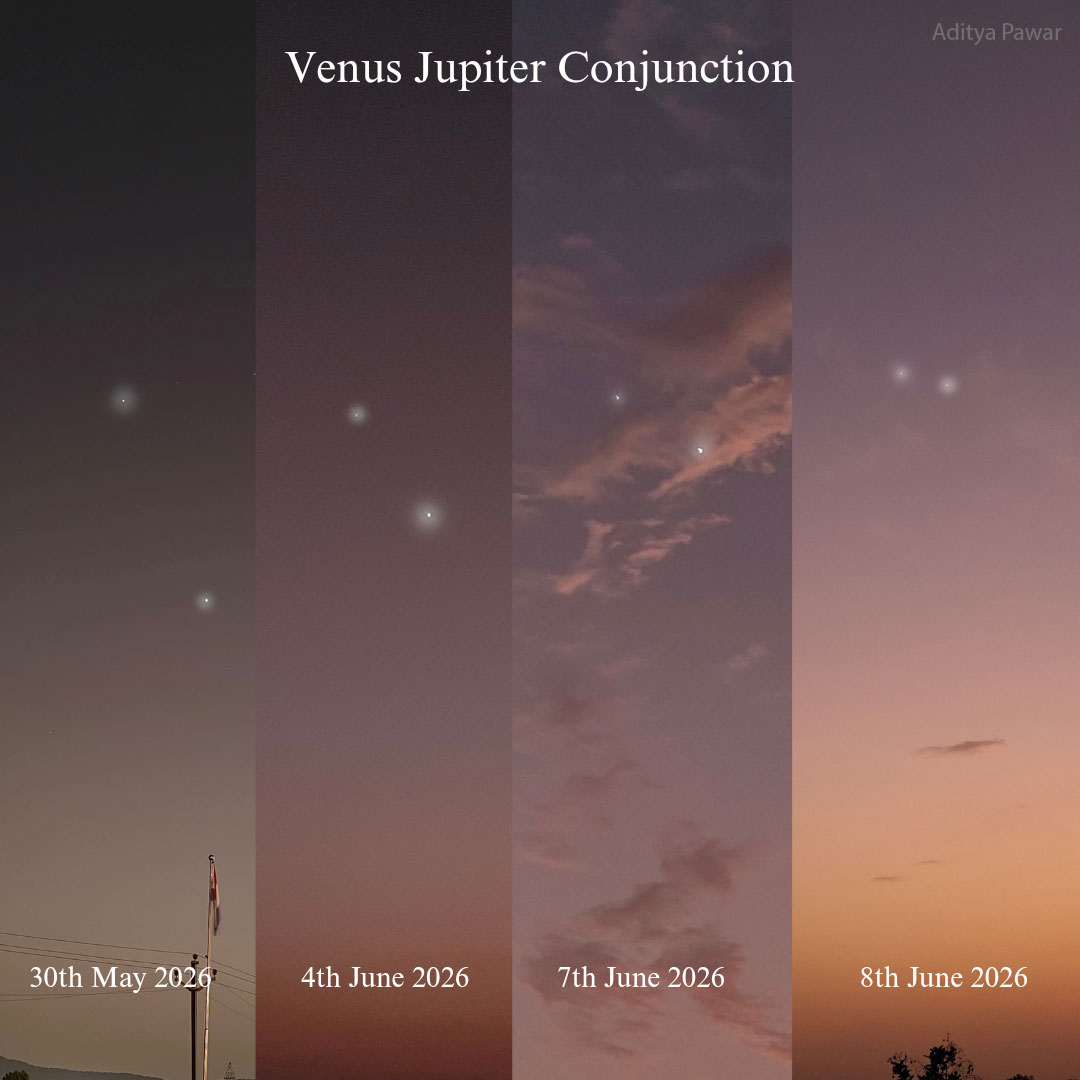
Every celestial object sails across the sky during the course of a day. But our perceptive ancestors noticed that most do not move relative to each other. It was as if enclosing us earthlings was a mighty, solid, revolving dome—the firmament—and embedded on that ever-turning dome were tiny ever-glowing crystals—the stars—frozen in place.The firmament, a biblical term, finds linguistic kinship in the East: in the Sanskrit word dharma (a complex term that, among many things, means cosmic order, law, duty), and also in the word dharti (the earth). The firmament, dharma and dharti, as their ancient root *dher- suggests, are all a form of support or maintenance, one imaginary, one abstract, and one real.The “fa-dha” kinship parallels the one between the words related to smoke, the Latin fuma and the Sanskrit dhūma.
Our ancestors, staring in wonder at these crystals of light, dreamt of lines connecting them to form shapes, the constellations. These constellations, memorable and recognizable like paintings decorating the inner walls of the dome, reliably guided our ancestors in navigating and ploughing the earth. Reliable they were, because as the dome rotated, so did the stars, but always only as a whole, keeping solid and intact the paintings in our ancestors’ imagination. Some shapes disappeared every dawn overwhelmed by the deluge of sunlight, but they still revealed themselves the next night, solid and intact;These are the circumpolar constellations, like the big dipper, that orient one towards the north or the south. yet others might, one fine night, abandon the sky for months at length, but they still returned a few months later, solid and intact. These are the seasonal constellations, like the constellations along the zodiac belt, whose arrival in a year would mark the beginning or the end of a season.
But our perceptive ancestors noticed on this solid dome a handful of objects that moved relative even to the dome and its orderly stars. These objects, it seemed, possessed a will of their own: they were insubordinate to the rigid shapes, the cosmic order imposed by the human mind onto the heavens. These rebellious travelers of the celestial dome were named after the Greek planan (to wander, to lead astray, to deceive), to become known as the planets,It is imprecise to attribute the “wandering” in this etymology to simply the fact that a planet orbits the sun. It is their relative motion against the celestial map on the dome that gave rise to the idea of “wandering”. their refusal to fit into a constellation most prominent when observing them as they come closest to each other in the sky during what is called a conjunction.This picture of the celestial dome reframes our interpretation of the word disaster (dis + aster). Naively, it conjures the image of an ill-positioned and misaligned star. But in the celestial dome, the stars, which are forced into place on the distant walls of the dome, must themselves bear no fault for their positions; it is the planets, the apparently free-willed entities in the foreground, that must have wandered into an unwelcome constellation to spell disaster.